Horses, Camels and Other Characters Who Refuse to Cooperate


Why animals in fantasy should be more than transport
Fantasy writers ask a great deal of animals, and animals, on the whole, put up with remarkably little fuss about it.
Horses gallop through the night, carry heavily armed warriors across entire kingdoms, and then wait patiently outside taverns while their riders get on with the important business of advancing the plot. Camels cross deserts without complaint, apparently requiring nothing more than someone to remember which end to sit on.
They rarely go lame. They rarely lose a shoe, bite anybody important, refuse to move, or decide that today's heroic quest can, frankly, get stuffed.
Real animals are considerably less accommodating than that.
And that, it turns out, is exactly what makes them useful to a fantasy writer.
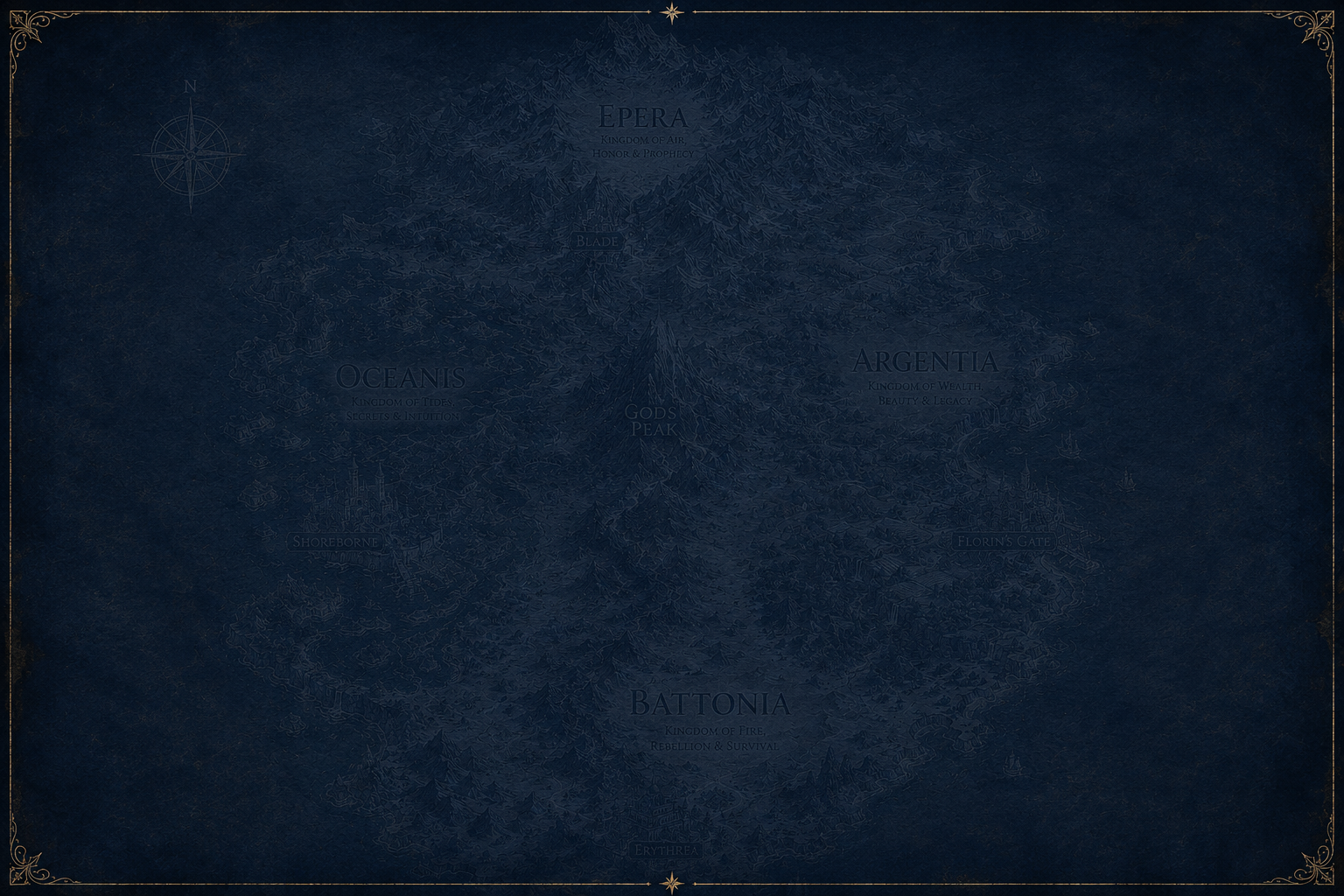
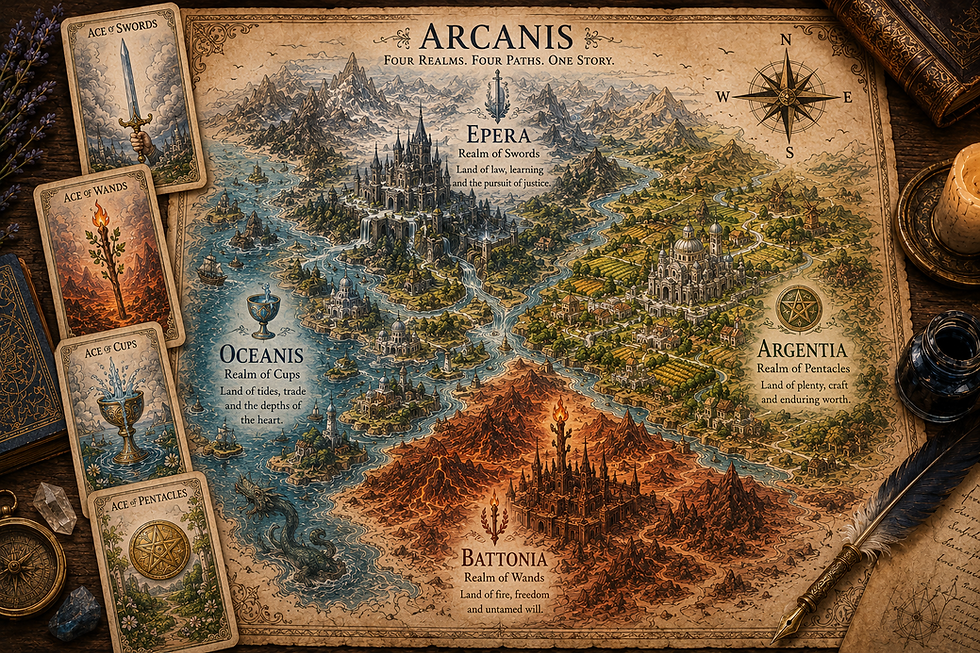
I've been thinking about this rather a lot lately, because I've started work on The Ember Queen — Book Three of Way of the Wands. It opens around the time of the Great Battonian Horse Fair at Erythrea, which has sent me tumbling down a rabbit hole about horses, breeding, racing, trade, and precisely how much chaos erupts when you gather a large proportion of a kingdom's most valuable horses in one place and hope for the best.
But animals have been part of the fabric of Arcanis for a long time now. And some of them have very definite opinions about it.
Snake Bite: The Camel Nobody Asked For
In The Unbound Flame, Domita eventually finds herself in possession of a camel called Snake Bite.
Snake Bite is nasty. He's lazy. He farts, with real commitment. He has little interest in pleasing anybody, and given the choice between cooperating with the humans around him and making their lives more difficult, he will reliably choose the latter, every single time, as a point of principle.
And yet, in a strange way, he's exactly the right animal for Domita.
Domita is fiercely independent. She's difficult to control, suspicious of authority, and has strong opinions about anybody who attempts to tell her what to do.
So does Snake Bite.
I didn't sit down and consciously decide that Domita required a camel who reflected her own personality back at her. Snake Bite simply became Snake Bite, in the way these things do. But that's one of the genuine pleasures of writing animals as individuals rather than equipment — sometimes the animal turns into a strange little mirror of the person riding it.
Domita would object to the comparison, for the record. Particularly the farting.
Dust Foot: The Old Campaigner
Then there's Dust Foot, Varek Farron's camel — and almost Snake Bite's opposite in every way that matters.
He's old, faithful, and wise: a beast who has covered a great many miles and appears to understand rather more about the world than he has any intention of explaining. He fits Varek perfectly. Varek is an older man carrying his own history, and Dust Foot feels as though he's carrying one too.
There's something wonderfully reassuring about an old working animal who simply knows his job. He doesn't need to be magnificent. He just needs to keep going.
And Then There Is Khezar
Khezar is another matter entirely.
Eventually becoming Nino's camel, Khezar is enormous, almost black, and thoroughly aware of his own magnificence. He has strong opinions of his own too, because apparently I am constitutionally incapable of inventing a Battonian camel without also handing it a fully formed view on the management.
But Khezar's personality suits Nino in a way that Snake Bite never could. And that's where these relationships get interesting to me — the animal doesn't have to be its rider. It can complement them. Challenge them. Reveal something about them that they'd never say out loud.
Sometimes the particular animal a character earns, chooses, or is chosen by says something about who that character is becoming. Even if — especially if — that animal is a camel with a grudge.
In Battonia, Animals Are Also an Economy
The camels aren't there simply because Battonia is a desert kingdom and deserts, by law of fantasy tradition, are required to contain camels. They're crucial to how the country actually functions. So are horses, doing rather different jobs.
A society built across hot, difficult terrain needs animals capable of carrying people and goods over long distances. Trade depends on them. Communication depends on them. Whole caravan routes exist purely because people, animals, and water can move along them together.
Which means somebody breeds those animals. Somebody buys and sells them. Somebody feeds them, trains them, and treats them when they're hurt. People become wealthy because of them. Other people spend their entire lives caring for them.
And once you start thinking about animals that way, you've stopped inventing fantasy transport and started building an economy — whether you meant to or not.
A Horse Can Tell You About Its Rider
This isn't confined to Battonia. Over in the Saga of the Swords, Dominic Skinner has his beautiful chestnut mare, Kismet, and their bond is fierce.
She's beautiful and faithful, and she matters to him in a way that goes well beyond her ability to get him somewhere quickly. That's particularly useful with a character like Dominic, who isn't always inclined to explain what he feels. But how somebody behaves towards an animal can tell you things dialogue simply can't.
A horse doesn't care about Dominic's reputation. She knows the man holding the reins.
Treshara and the Last Embermane
And then we come back to Battonia, and Treshara — Domita's stallion, the last Embermane.
Here we move beyond personality into something else entirely. Because if an animal belongs to a particular bloodline, and that bloodline is disappearing, the animal no longer represents only itself. It represents history. Possibly the future too.
Who bred these horses? Why were they prized? Who owns the surviving bloodlines, and what happens if they're lost? What would somebody give to preserve them — or to control them?
Those become very interesting questions indeed when the animals in question belong to the great families of a country where horses also mean wealth, prestige, and military power.
Which brings me to the problem currently occupying rather too much of my brain.
Welcome to the Great Battonian Horse Fair
At the start of The Ember Queen, Erythrea is preparing for the Great Battonian Horse Fair. There will be breeders, traders, great houses, ordinary horse dealers, grooms, riders, smiths, saddlers, and bookmakers. There will be a prestigious race, the Magister's Cup. There will be some of the finest bloodstock in Battonia, all converging on one city at once.
And all of it has to be organised.
At first I thought: lovely, a horse fair. Then the questions started arriving, uninvited, the way they do. Where do hundreds of horses stay? Where do their owners stay? Who supplies the feed and water? How does valuable bloodstock get safely into a crowded city without incident? Who decides which horses enter the Magister's Cup, and who takes the wagers? What happens when two powerful families want exactly the same thing?
And who, precisely, has been landed with the unenviable job of making sure this entire enormous event actually works?
That would be Lady Alessandra Lombard.
She has other problems, as it happens. Her family is in disgrace. Her daughter is a fugitive. The Magister is watching her. There are strange lights appearing in the mountains.
But the visiting horses will still require stabling.
Because the Horse Still Needs Feeding
That's one of the things I love most about worldbuilding — the enormous things and the ordinary things have to coexist, whether they like it or not.
Kings may fall. Rebellions may begin. Ancient magic may awaken and the fate of a kingdom may hang in the balance. Somebody still has to feed the horse. Somebody still has to load the camel. And sometimes those supposedly ordinary animals turn out to be woven into the bigger story all along.
Kismet reveals something about Dominic. Snake Bite reflects something of Domita, however reluctantly. Dust Foot carries the quiet wisdom of an older generation. Khezar has all the majesty of an animal who knows perfectly well he's magnificent. And Treshara carries a piece of Battonia's past on four legs.
Which is why, increasingly, I don't think of the animals of Arcanis as transport at all.
They're part of the world. And every so often, they're characters in their own right.
Although Snake Bite would absolutely refuse to attend the cast meeting.
I'm currently working on The Ember Queen, Book Three of Way of the Wands.
If you'd like to meet Snake Bite, Dust Foot, and Treshara, the journey into Battonia begins with The Unbound Flame. Enter Battonia
Or, if you'd rather meet Dominic and his beautiful Kismet, you can begin the completed Saga of the Swords with Queen of Swords. You'll first meet Dominic with Kismet in Book 2. [ENTER EPERA]
May you walk in magic.
Christine

Comments